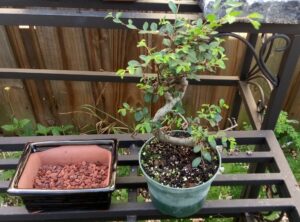

Beginners Guide to Repotting a Bonsai Tree
When repotting a bonsai tree there are several guidelines to follow. The specific amount of time to wait between repotting your bonsai is dependent on the species of your bonsai specimen. Early spring is the best time of year to repot your bonsai tree.
It is very important for your bonsai to have proper drainage. This is accomplished by proper soil selection – such as lava rock and making sure your pot has proper drainage holes. Creating a free draining layer of soil substrate on the bottom layer of your pot will prevent water from pooling up and causing the roots of your bonsai to rot.
Basic Step By Step Guide – How to Repot a Bonsai Tree
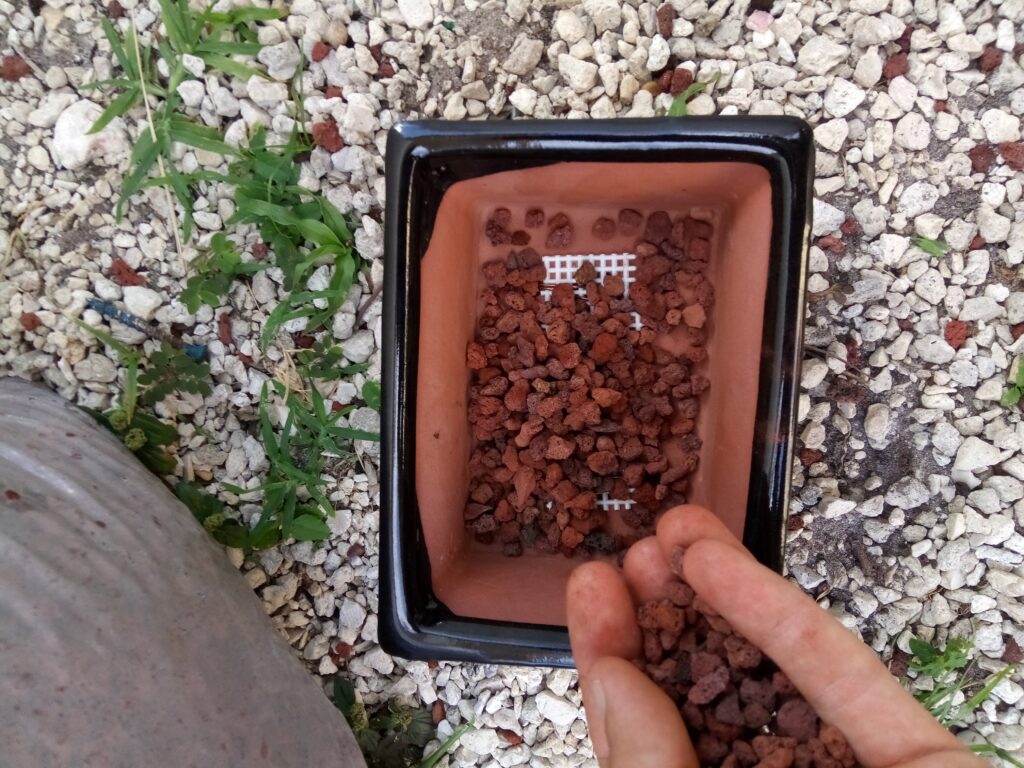
Add a drainage layer of just lava rock, Akadama or another free draining soil medium.
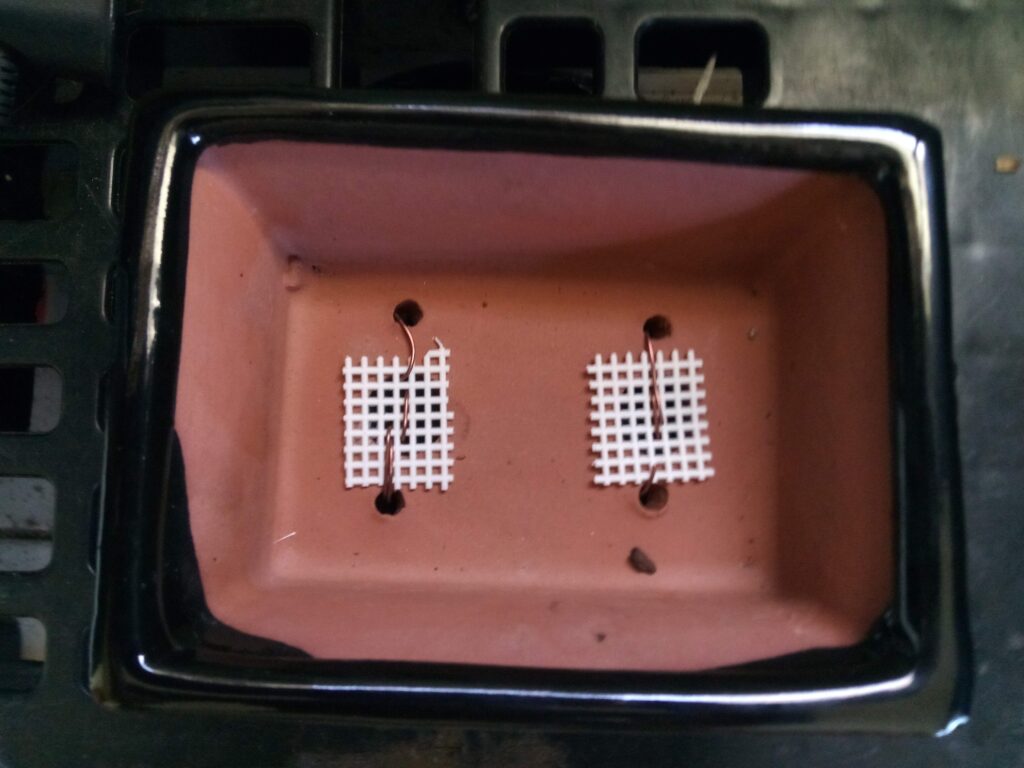
Cut two squares of mesh screen to cover the drainage holes and secure them with copper wire.
Now we transfer our Chinese Elm Pre Bonsai Tree from the plastic nursery container to the new ceramic pot. First gently removing the soil using a root rake or chopstick.
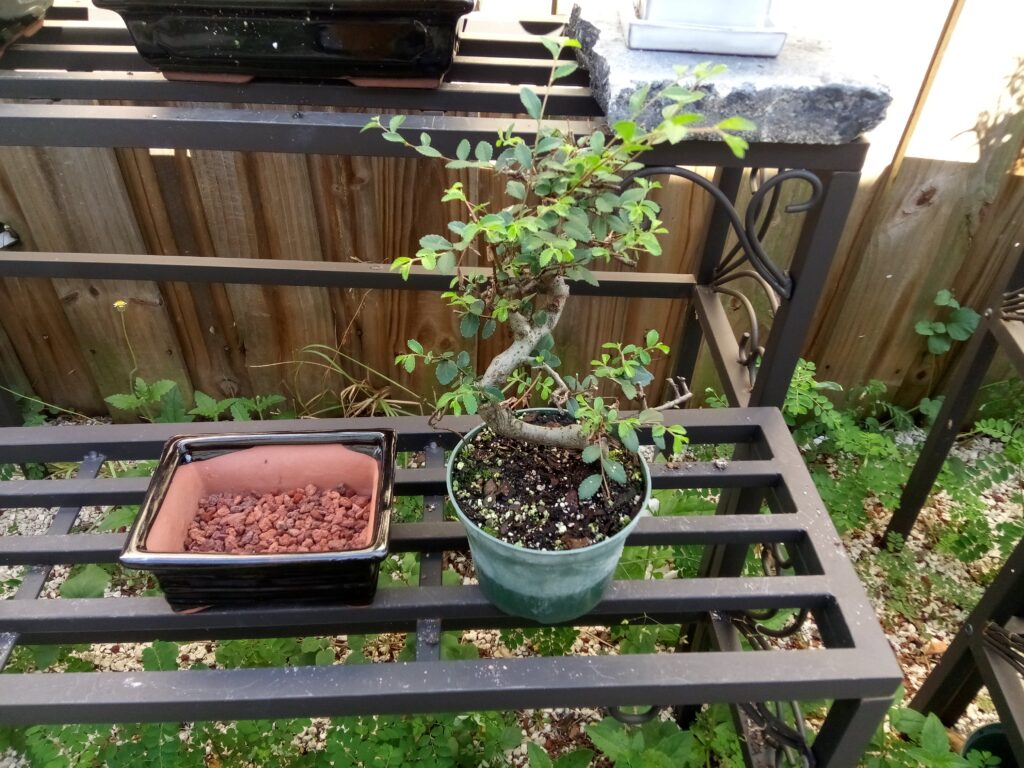
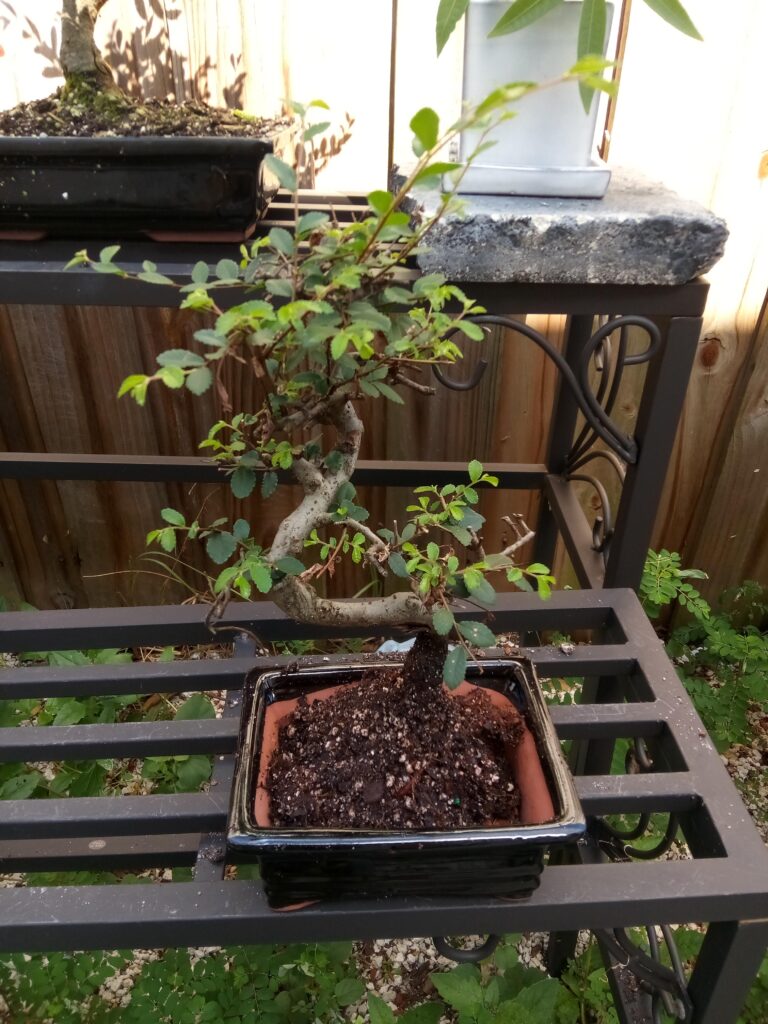
Place the root ball on top of the drainage layer. You can use some of the organic soil from the pre bonsai as long the soil is good quality.
Add more pure lava rock bonsai soil so that we can gradually work it into the root system of the tree.
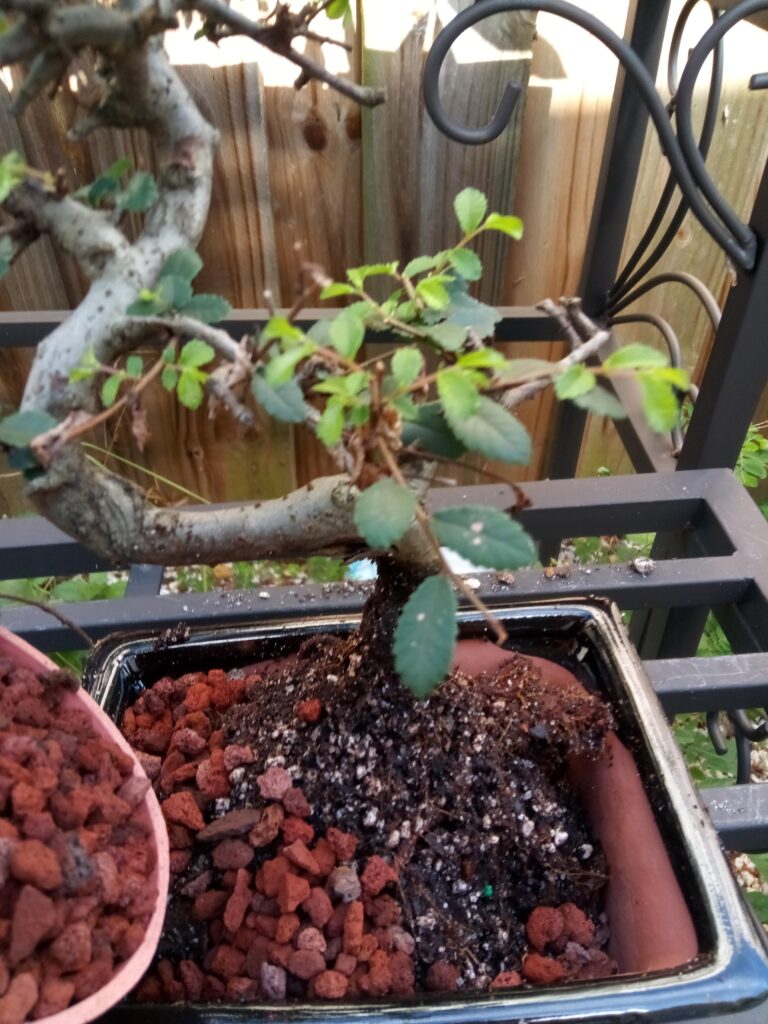
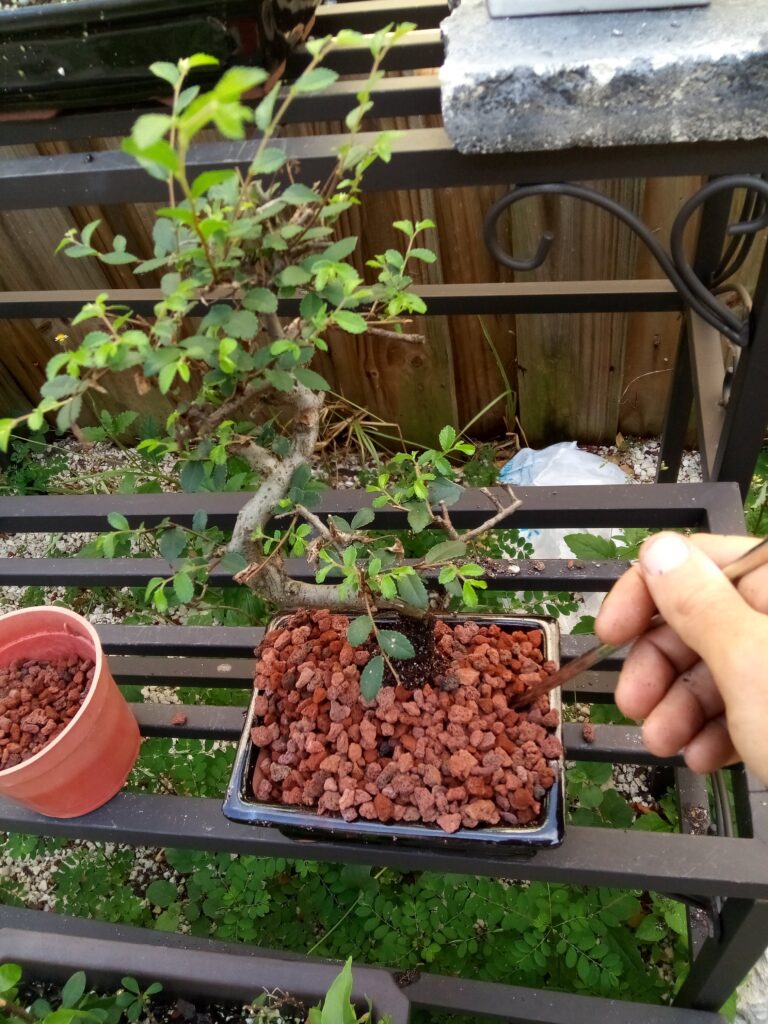
Gradually work the new lava rock in with a chopstick (as shown). This the new soil work its way into the root system and help the roots to adapt to the new pot.
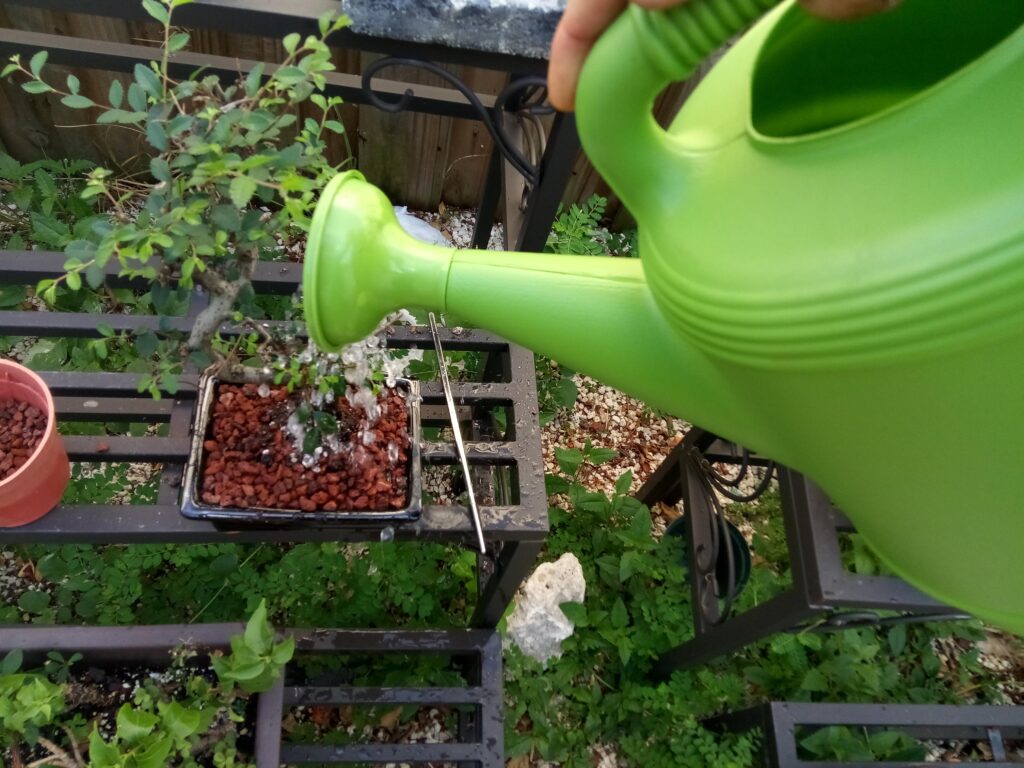
Then make sure to water the tree so that the lava rock can absorb plenty of moisture.
In most climates the best time of year to repot your bonsai tree is early spring. This time of year the tree is coming out of it’s Winter dormancy period and will be ready to produce new growth.